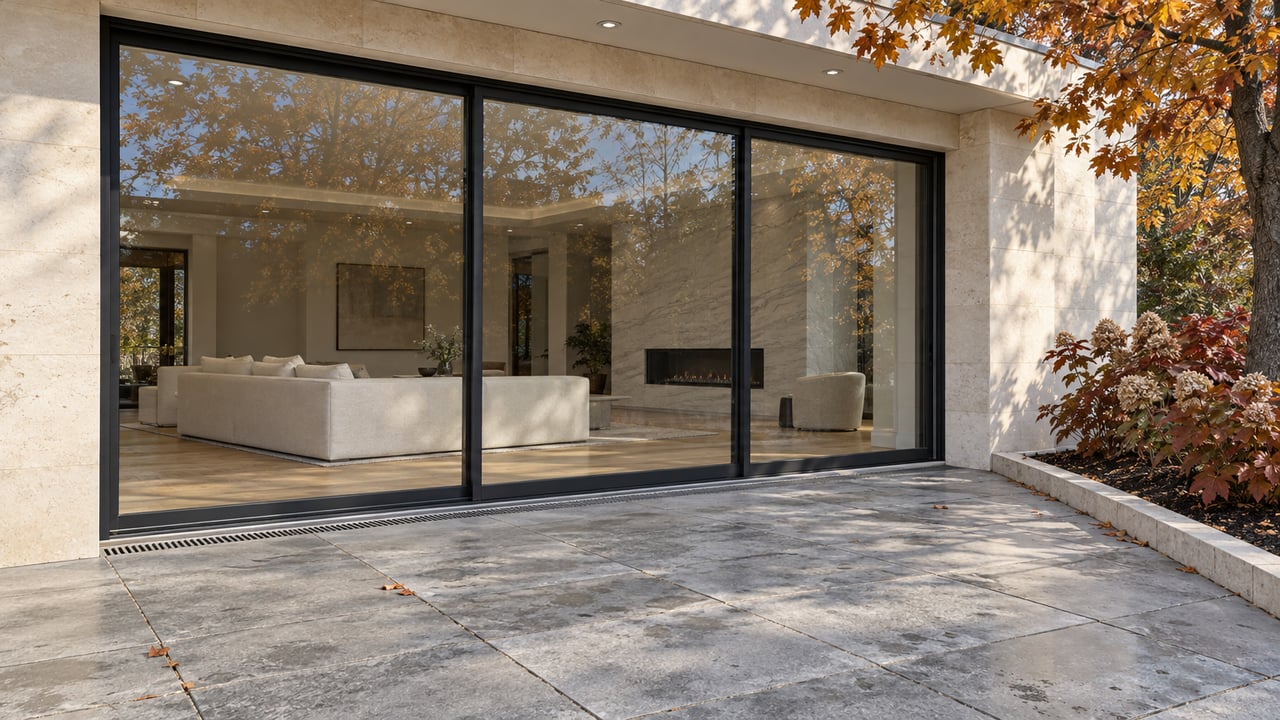
Last winter, the sellers of a Lawrence Park house wanted a closing in May or June. They agreed to March 31 instead. The Globe and Mail reported that the five-bedroom house, with 6,100 square feet of living space and a saltwater pool, sold for $6,413,558. That was about 3.5 per cent below its most recent asking price of $6.645 million. Both sides set the March date to beat Toronto's higher Municipal Land Transfer Tax on luxury homes, which took effect April 1, 2026. Andre Kutyan, the Harvey Kalles broker on the deal, told the Globe the coming increase was "100 per cent part of the negotiation."
The deal shows how the new tax entered negotiations. A new tax rate gets a lot of attention, but most of its effect comes from how much of the price it applies to.
A tax charged in slices
Toronto charges its land transfer tax by bracket. Each rate applies only to the part of the price that falls inside its band. The rate on the band from $2 million to $3 million stays at 2.5 per cent. On December 16 and 17, 2025, City Council passed item 2025.EX28.1, which raised every bracket above $3 million for properties with one or two single-family homes, starting April 1, 2026.
| Portion of the price | Rate, Jan. 1, 2024 to Mar. 31, 2026 | Rate from Apr. 1, 2026 |
|---|---|---|
| Over $3M up to $4M | 3.5% | 4.40% |
| Over $4M up to $5M | 4.5% | 5.45% |
| Over $5M up to $10M | 5.5% | 6.50% |
| Over $10M up to $20M | 6.5% | 7.55% |
| Over $20M | 7.5% | 8.60% |
The current rates are on the City of Toronto's MLTT rates page. The earlier ones are on its historical rates page.
Ontario charges its own land transfer tax on top of the city's. For land with one or two single-family homes, the province's rate is 2.5 per cent on the portion above $2 million.
Council's change did not create the $3 million line. The luxury brackets have applied since January 1, 2024. In April they became steeper.
In September 2026, detached homes in TRREB's C04 district, the Midtown reporting district TRREB uses for its figures, sold at an average of 97 per cent of list price. In the Lawrence Park sale the Globe described, the gap between the last asking price and the sale price was about $231,000.
Why the deadline passed quietly
If the increase had changed behaviour, the clearest sign would have been a rush of deals closing in March 2026 and a slow April. The C04 detached numbers do not show that.
| C04 detached | 2025 sales | 2026 sales |
|---|---|---|
| March | 43 | 34 |
| April | 46 | 57 |
March 2026 sales came in below the year before. April, the first month under the new rates, came in above it. Four months of district data can't prove why sales moved. They also show no sign of a rush.
Agents described it the same way. On April 8, the Globe and Mail reported that the deadline "passed with barely a ripple." One brokerage's closings team saw no noticeable rise in end-of-March closings compared with the year before. Another broker reported steady demand for homes between $3.5 million and $4.5 million. He said negotiations on his recent $4 million sales did not turn on the tax. The same report said some buyers' agents did not know the increase was coming.
City Hall expected this. When Council approved the change, CBC reported staff's estimate of $13.8 million in added revenue for 2026. The Toronto Star quoted the City's chief financial officer as saying the tax was unlikely to cool the luxury market significantly.
The September median, and why it fell so far
Six months later, the C04 numbers look worse than the tax story would suggest. TRREB's September 2026 Market Watch puts the district's median detached sale price at $2,335,000. In September 2025 it was $2,800,000, so it fell about 17 per cent. The average fell from $3,165,890 to $2,650,889. Read alone, that drop could make a buyer think high-end homes in the area have lost a sixth of their value. It could also lead someone to link the drop to April.
TRREB's Home Price Index tells a different story. It prices a standard home with fixed features, so it doesn't change just because the month's sales tilted cheaper. For September 2026, the C04 single-family detached benchmark is $2,390,800, down 3.58 per cent from a year earlier. TRREB says the index is designed to be less volatile than medians and averages, which swing with the mix of expensive and inexpensive homes sold.
The benchmark is down a few per cent from a year ago. Most of the 17 per cent drop in the median comes from which homes changed hands. There were 37 detached sales in September 2026, compared with 39 a year earlier, and the most expensive homes made up a smaller share of them.
The other September figures point the same way:
- Active listings rose to 181 from 161, so buyers had more to choose from.
- Average days on market fell to 23 from 28.
- Average sale-to-list ratio rose to 97 per cent from 95 per cent.
There were more homes for sale, yet the homes that sold went faster and closer to asking. Those figures fit a market where sellers are pricing close to what buyers will pay, with values down modestly, in line with the benchmark. Across the GTA, TRREB reported 5,040 sales in September 2026, down 9.0 per cent from a year earlier, and an average price of $1,006,409, down 5.1 per cent. C04 has come through a soft year better than its median suggests.
The C04 median now sits below the $3 million line. These are district-wide figures, not Lawrence Park figures, so a single street's pricing can differ a lot from the district median.
Why did the City raise it?
Council's record says Mayor Olivia Chow's aim was to shift more of the City's funding burden onto the small share of luxury-home buyers. CBC put the expected added revenue at $13.8 million in 2026.
If you're considering a Lawrence Park purchase or sale, Adam Weiner + Associates can help. Request a concierge consultation.