"Think of it as this property, selling on that date." That's how the Municipal Property Assessment Corporation describes the assessment on any Ontario home for the 2026 tax year. MPAC's notice guidance names the date: January 1, 2016.
The rule covers more than older houses. MPAC says that when a property changes through new construction or a major renovation, it updates the assessment to what the property "would have sold for on January 1, 2016 – in its current state and condition, including any major changes since then." So a custom home finished on a Bedford Park street this fall is valued as if it had been sold almost eleven years ago, in a market that no longer exists.
This affects how buyers compare homes. The property tax figure on a Bedford Park listing applies 2026 tax rates to an assessed value pegged to 2016. The benchmark data suggests that Bedford Park's detached homes probably pay less than their relative share of Toronto's tax base right now, and Ontario has just extended the freeze that keeps it that way.
The deferral that arrived on October 29
Ontario's 2026 Fall Statement, published October 29, put it in one sentence: "the provincewide reassessment will continue to be deferred to ensure stability for taxpayers." As long as the deferral lasts, every Bedford Park bill keeps resting on January 1, 2016 assessed values.
The same document proposes legislative changes to let MPAC run a centralized online platform for viewing select assessment roll information. If the changes pass, the service is expected in mid-2027. At the moment, viewing the assessment roll generally means going to a municipal office in person.
The freeze dates back to the pandemic. MPAC says Ontario postponed the 2020 Assessment Update. On August 16, 2023, the province filed a regulation that extended the postponement through the end of the 2021–2024 cycle. The Globe and Mail reported in September that Finance Minister Peter Bethlenfalvy had said the government was still reviewing the issue: "We have gone through a pandemic. We're going through a tariff situation. We've had a lot of uncertainty and what people want is certainty."
A reassessment moves shares, not totals
Higher values do not by themselves mean higher taxes. The City of Toronto explains on its property assessment page that an assessment-related tax increase comes from a property's value rising more than the City average. The tax experts quoted in the same Globe article say the same thing. A reassessment doesn't give the city a windfall. It "redistributes the basis for the tax burden differently, across the same taxpayers."
So the question for a Bedford Park home is whether it gained more or less than Toronto as a whole since January 2016. If it gained more, the frozen roll undercharges it relative to everyone else, and a future reassessment would correct that.
How far C04 moved against the city
Bedford Park-Nortown is one of five communities in TRREB's Toronto C04 district, along with Englemount-Lawrence, Forest Hill North, Lawrence Park North and Lawrence Park South. TRREB's MLS Home Price Index publishes benchmark prices for the district and for the city. This table compares January 2016, the month the assessment roll is pegged to, with September 2026, the latest month in TRREB's published HPI tables.
| MLS HPI benchmark | January 2016 | September 2026 | Change |
|---|---|---|---|
| Toronto C04, detached | $1,405,700 | $2,390,800 | about +70% |
| Toronto C04, composite | $1,202,000 | $1,862,100 | about +55% |
| City of Toronto, detached | $876,300 | $1,417,600 | about +62% |
| City of Toronto, composite | $617,100 | $908,200 | about +47% |
Sources: the January 2016 HPI tables and the September 2026 HPI tables.
The C04 detached benchmark rose about 70 percent over a period when Toronto's composite benchmark rose about 47 percent. C04 detached also outpaced detached homes citywide. These are benchmark prices, not MPAC values, and a district figure covers more streets than Bedford Park. Still, it is a 23-point gap against the composite. If assessments tracked these benchmarks, a typical C04 detached home would come out of a reassessment with a bigger share of the city's tax base than it carries now.
This doesn't apply to every property. In the same Globe article, property-tax consultant Paul Sullivan of Ryan ULC estimated that about half of Toronto condo owners were overpaying, based on 2025 sale prices. His firm's review of 1,643 detached Scarborough sales estimated that 40 percent of those owners were paying more than $1,000 a year too much. The Globe noted that his figures are illustrative rather than exact tax-bill calculations. They assume tax on full sale value and leave out the four-year phase-in the system used before the freeze. MPAC data in the same article put average residential appreciation in the GTA at 72 percent from 2016 to 2025. When some owners are overpaying relative to the base, other owners are underpaying, and the C04 benchmark suggests many Bedford Park detached owners are in that second group.
What a buyer actually takes over
Toronto's 2026 residential tax rates are 0.605295 percent for the City, 0.009016 percent for the City Building Fund and 0.153000 percent for education, for a combined 0.767311 percent of assessed value. The city's 2026 budget release set a combined residential and City Building Fund increase of 2.2 percent, or $91.53 a year on the average MPAC assessment of $692,140. At the combined rate, that average assessment works out to roughly $5,311 for 2026. The bill applies the current rate to the 2016 assessed value, not to today's sale price, so whatever a home has gained relative to the city since 2016 stays outside the bill.
Bedford Park's sale prices are far above that city average. In September 2026, C04 recorded 37 detached sales at an average of $2,650,889 and a median of $2,335,000. Homes sold at 97 percent of list price after an average of 23 days on market, according to TRREB's September Market Watch. A buyer paying those prices takes over a tax bill built on the seller's 2016 relative position, and that position has no stated end date.
This changes how the usual comparisons work:
- Detached against condo. The carrying-cost gap a buyer sees today is probably narrower than a reassessment would leave it, if Sullivan's condo estimate and the C04 benchmark gap both hold.
- Bedford Park against a slower-appreciating neighbourhood. A lower tax bill on a Bedford Park listing partly reflects 2016 values. It isn't a permanent feature of the street.
- Any forecast that holds property tax flat in real terms. That assumes the freeze continues, and the province has only said it "will continue to be deferred."
The rebuild problem, for builders and their buyers
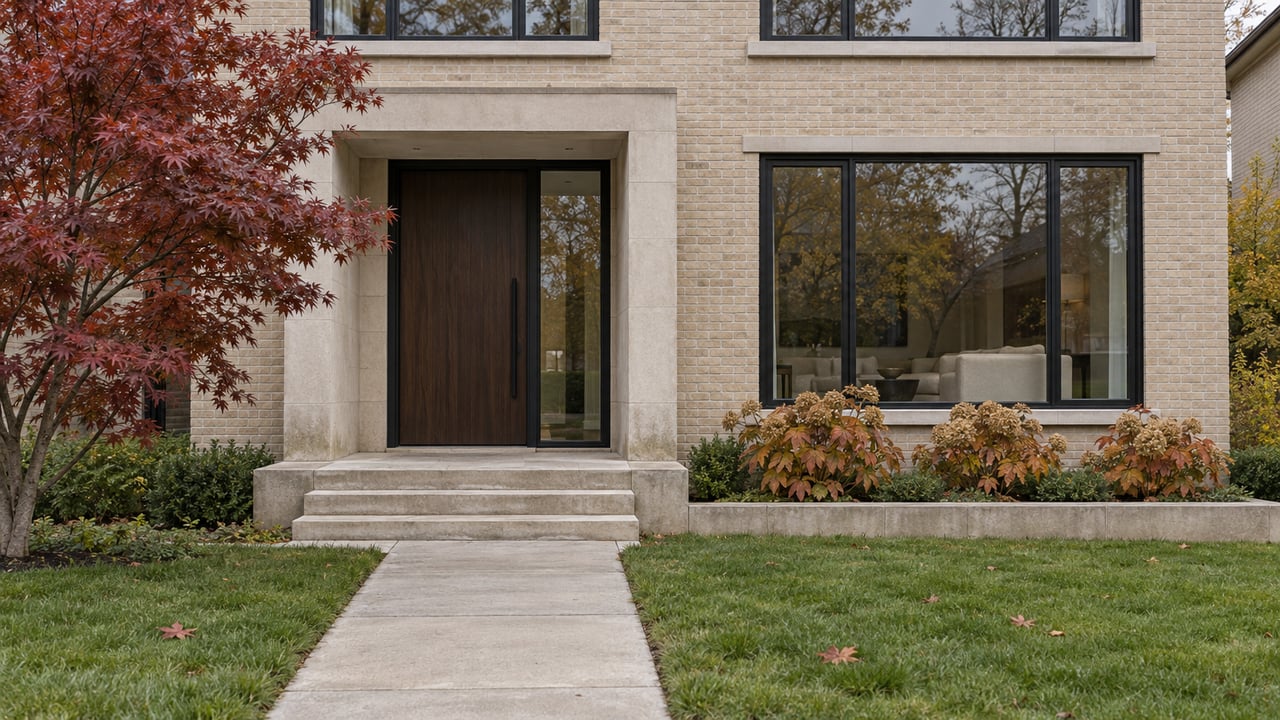
Infill is common in Bedford Park, and that's where the 2016 rule feels most counterintuitive. MPAC's newly built home guidance says a new-home assessment draws on local sales and factors such as location, lot size, living area, age and construction quality. Building permits and title documents feed into its records, the permit process may lead to an inspection, and an assessment-change notice follows after the owners move in. Under the valuation date, the finished house is priced as if it had stood on its lot in January 2016.
That has three effects, in order:
- During construction, the property is still assessed in its earlier state.
- After completion, the notice values the new house at a 2016 price, which is well below what it sells for today.
- A future reassessment would reprice that house, along with every other property, against the citywide average at the new valuation date.
So a buyer of a new Bedford Park home and the builder's sales team are both working with a tax figure that stays tied to 2016 until the province changes it.
A short FAQ
How does MPAC handle disagreements over an assessment? MPAC's notice page says owners of residential property file a Request for Reconsideration with MPAC before any appeal to the Assessment Review Board, and it listed March 31 of the 2026 tax year as that year's deadline. MPAC directs owners to AboutMyProperty to see how their property was assessed and compare it with others nearby.
Would a reassessment raise the city's total tax revenue? No. As the Globe's sources explain, it changes how the existing burden is divided among taxpayers. The city budget sets the total.
What did the October 29 Fall Statement say about reassessment? It says the provincewide reassessment "will continue to be deferred to ensure stability for taxpayers."
This post is general information, not legal, tax or financial advice. Anyone weighing an assessment question or a purchase should confirm their own situation with a qualified tax professional or lawyer.
If you're comparing a Bedford Park detached home, a new infill build or a condo nearby, the tax figure on each listing rests on a 2016 assessed value. Adam Weiner + Associates can go through carrying costs, recent C04 sales and the assessment rules with you before you commit. Request a concierge consultation.