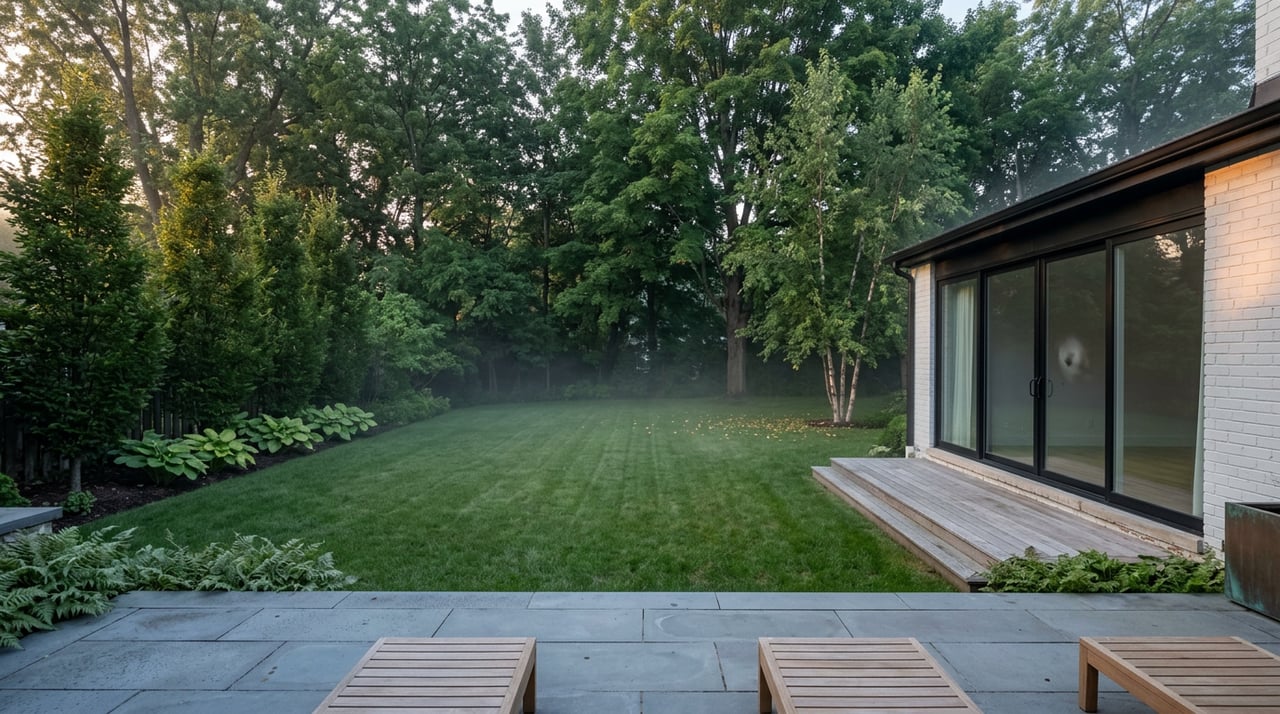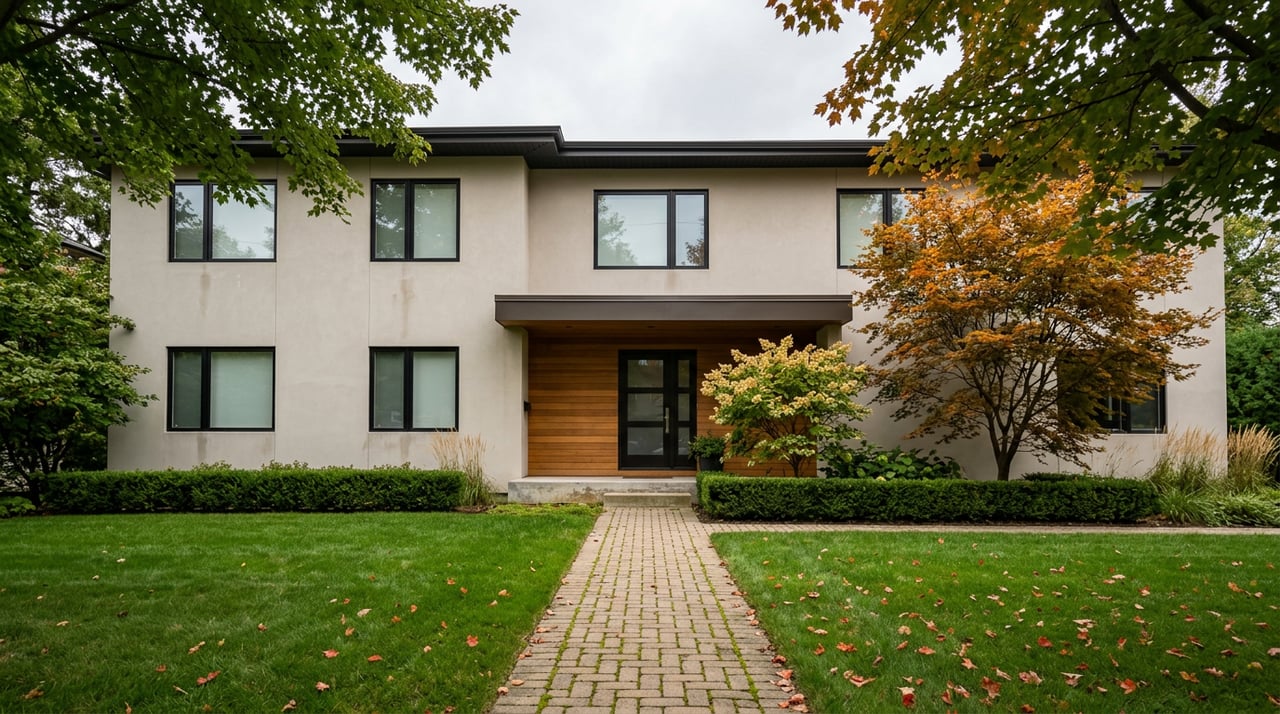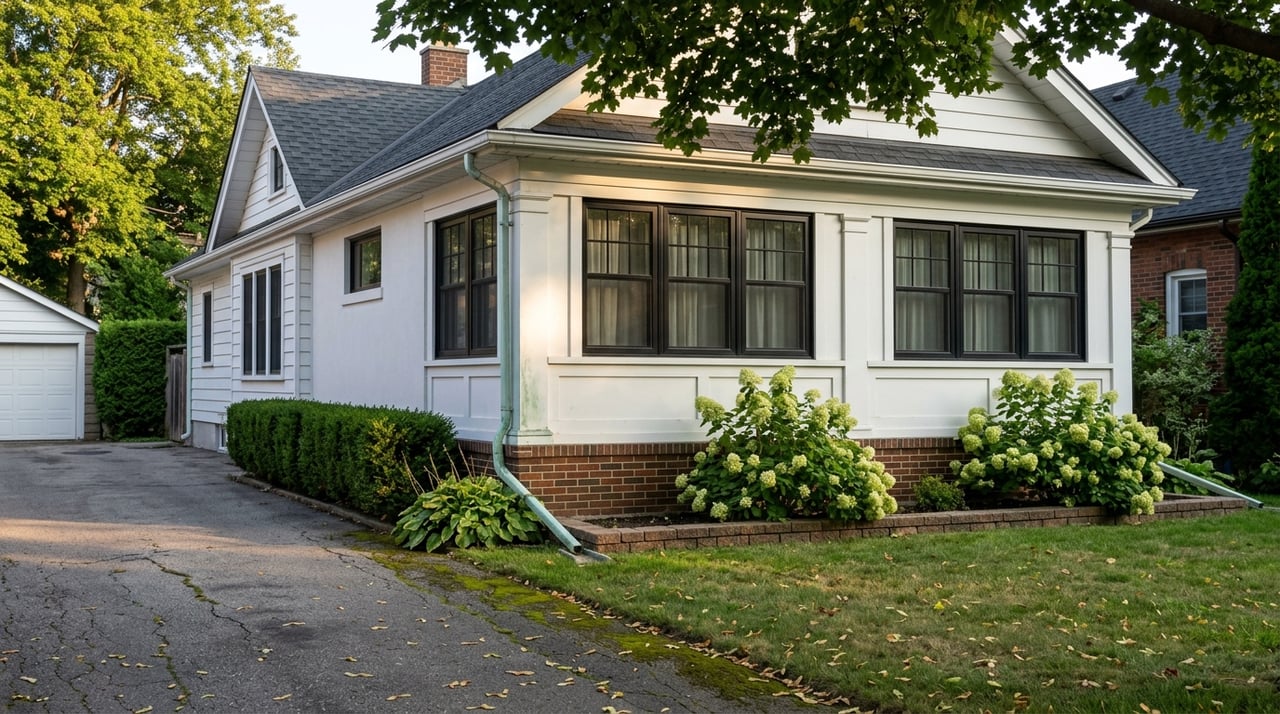
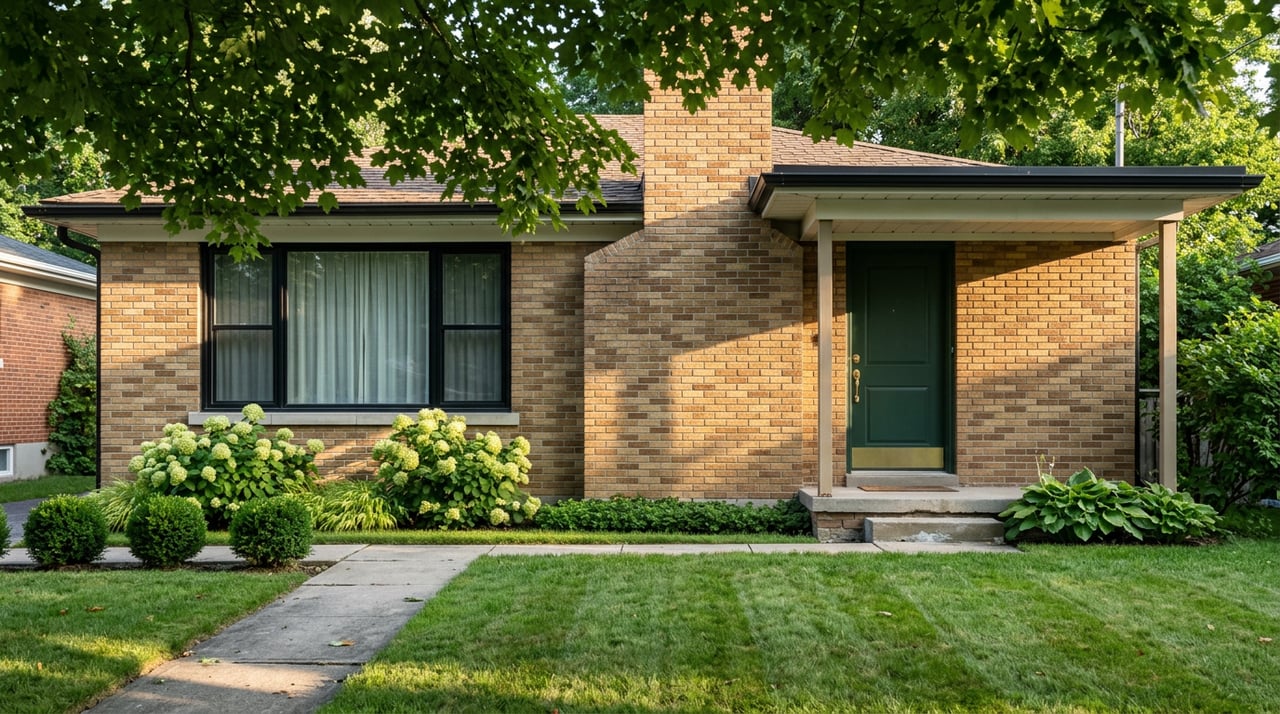
Drive north from Lawrence on Bathurst, cross the 401, and the streetscape shifts in a single block. The lots widen. The tree canopy thickens. The houses shrink back into their 1950s footprints, tidy brick bungalows with detached garages and long back gardens. On any listing portal, the average sale price drops by roughly a third from Bedford-Park-Nortown, and by more than a third from Englemount-Lawrence one traffic light east.
That price gap is the story every buyer thinks they've read. The real story is what sits on the other side of the neighbourhood, along the western fence line, where 370 acres of former airport runway are about to move dirt for the first time in a century.
The number the portals show
Zolo's most recent snapshot puts the average Clanton Park home at $894,000 with 30 days on market, and detached listings closer to $901,675 with 29 days on market. That is roughly 14% below the Toronto average. Across the border in Englemount-Lawrence, the average sale sits around $1,500,000, and the detached numbers in Bedford Park sit meaningfully higher again.
The interpretation most buyers reach for is that Clanton Park trades at a discount because the housing stock is smaller and older. That is partially true. It is also incomplete. Look at how the market is actually clearing: 17.9% of homes sell in under 10 days and 28.6% sell above asking, which is above the city average. A neighbourhood ranked #121 out of 144 by sold-home velocity should not be over-asking at a rate above the city median. Something in the demand curve is pulling harder than the price sticker suggests.
What sits on the western fence line
The western edge of Clanton Park runs along the former Downsview Airport lands. Those lands are now called YZD, and they belong to Northcrest Developments, a subsidiary of the Public Sector Pension Investment Board that purchased the airfield from Bombardier Aerospace in 2018. The scale is unusual by Toronto standards and remarkable by any standard. Northcrest and Canada Lands together control a 520-acre sector including the airport, Sheppard and Chesswood districts and a portion of the Allen lands, representing one of the largest redevelopment sites in Toronto.
Full buildout is projected over three decades. The Globe and Mail has described a plan for 10 new neighbourhoods, 65,000 residential units, 45,000 people working on site, and a $30-billion price tag over 30 years. Rendering-stage promises are not market-moving on their own. What matters for a buyer choosing between a Clanton Park bungalow and a comparable house two neighbourhoods east is the calendar.
Here is where 2026 stops being an abstraction:
- Hangar District, phase one. Toronto City Council issued zoning and subdivision approvals for the first phase of the 370-acre YZD community on July 25, clearing the way for the launch of onsite servicing. Northcrest's development lead has said infrastructure work is going to start in earnest in 2026, with some demolition happening onsite first, leading into the full horizontal program.
- Wilson District plan submission. The second neighbourhood, sited around Wilson subway station at YZD's southernmost point and directly bordering Clanton Park, has a plan by Field Operations and SOM being submitted to the city in early 2026.
- Rogers Stadium already live. Northcrest has established interim programming including the temporary 50,000-seat Rogers Stadium, which began hosting concerts last summer. A neighbourhood does not usually acquire a stadium-scale amenity before it acquires new curbs.
- Vertical construction and first residents. Vertical construction is projected to start in 2028, with completion of buildings beginning in 2030 to 2031, and the first group of residents projected to move in by 2030.
How this changes a bungalow purchase
For a buyer choosing between Clanton Park and its wealthier neighbours, the useful frame is not "which house is nicer today." It is "which lot's context is being repriced during the hold period."
| Neighbourhood | Average price context | Position relative to YZD |
|---|---|---|
| Clanton Park | ~14% below Toronto average | Direct western border, Wilson District plan submitted 2026 |
| Englemount-Lawrence | ~$1.5M average | Two neighbourhoods east, no direct exposure |
| Bedford Park-Nortown | Higher again on detached | Further east, no direct exposure |
The housing stock reinforces the point. Clanton Park is one of the few Toronto neighbourhoods where a post-war bungalow streetscape has been largely preserved. That matters for two reasons. First, the lots are consistent, which makes them attractive to renovators and small builders pricing infill against a stable comparable set. Second, bungalow stock is what buyers use as a bridge product when they want land value plus a habitable interior while they plan. Detached bungalows and semi-detached homes represent strong value compared to more central Toronto communities, with growing interest from renovators and investors.
The transaction friction to understand up front is that this is a sub-market with fewer monthly transactions, meaning a small number of home sales can have an oversized influence on reported statistics. A single teardown selling to a builder at land value can pull the monthly average up. A single estate sale in poor condition can pull it down. Averages here should always be read against a specific block, a specific lot depth, and the presence or absence of severance potential. That is a conversation to have before you make an offer, not after.
The transit fact that reframes the value
Clanton Park has two Line 1 subway stations inside its boundaries: Sheppard West and Wilson. Downsview Park station sits immediately adjacent. That is three subway stops within walking distance of most of the neighbourhood, plus Highway 401 to the south and Allen Road to the west.
In a city where transit-served detached lots under $1M have become genuinely rare, this is the fundamental. The YZD masterplan is not a speculative catalyst layered onto poor bones. Northcrest's team chose this site because the lands have access to three transit stations and represent one of the largest community-building opportunities in North America. A Clanton Park buyer is inheriting that same infrastructure argument at bungalow prices.
What has not changed, and probably will not
The neighbourhood's institutional fabric is older than the redevelopment story and largely independent of it. The Beth David Synagogue, designed by Irving Grossman in 1959, is an example of cast concrete construction, with reliefs on the concrete panels designed by Canadian artist Graham Coughtry. The Toronto Heschel School and Yeshivat Or Chaim, founded in 1973, both operate here. Earl Bales Park sits on the eastern edge; Downsview Park, at 291 acres, sits on the western edge.
Community continuity is a feature, not a hedge. It is also the reason a buyer should not expect Clanton Park to become the Hangar District. The bungalows will remain bungalows for as long as their owners want them to. What changes is the context they sit inside.
A short FAQ
Will the YZD construction disrupt daily life during the hold period? Horizontal work begins in 2026 on the Hangar District, which is on the far western portion of the airfield, well removed from Clanton Park's residential streets. The Wilson District plan is closer to the neighbourhood and is still at the submission stage in early 2026. Buyers should ask their agent to pull the current construction management plan on file with the city before writing an offer on a block adjacent to Wilson Avenue.
Is Clanton Park considered part of the same market as the YZD lands? No. YZD is an entirely new district being built from the ground up. Clanton Park is an existing residential neighbourhood governed by its own zoning and its own comparables. The relationship is one of adjacency and infrastructure spillover, not merger.
Which streets carry the most severance and infill activity right now? The blocks closer to Wilson Avenue and the pockets developed on former Downsview airport land in the 1990s tend to see the most builder interest, because lot dimensions and title history support cleaner permits. A block-by-block read is worth requesting in writing.
The buyers who will do best in Clanton Park over the next five years are the ones who see the bungalow and the runway in the same field of view. If that framing describes how you want to think about a north Toronto purchase, Adam Weiner + Associates would be glad to walk the streets with you. Request a concierge consultation.