Walk down Avenue Road on a Saturday morning, past the small two-storey brick shopfronts, and you'll likely pass someone in club whites heading toward Wilson Avenue for a tennis match. It's easy to assume the neighborhood's name is the whole story: a cricket club moved in, the name stuck, done. But the club is actually the third identity this stretch of land has worn, and the version most people have never heard involves a tannery and a bottled water business that shipped product overseas.
The neighborhood you actually live in today, bounded roughly by Wilson Avenue, Yonge Street, Brooke Avenue, and Avenue Road, is a quiet grid of private drives and generous lots, mostly built out between the 1920s and the 1940s. It's the kind of place where a twenty-five-minute drive gets you downtown along either Yonge or Avenue Road, and where the Lawrence and York Mills subway stations are both close enough to walk. None of that changes because of what came before it. But it helps explain why so few people ever ask what the ground looked like before the houses went up.
A name that skips two chapters
Ask most residents why the area between Avenue Road and Yonge Street, bounded by Wilson to the north and Brooke Avenue to the south, is called Cricket Club, and you'll get a version of the obvious answer: there's a cricket club here. That's true, but it collapses more than a century of land use into a single fact. Before there was a club to name anything after, this same ground supported a tannery, then a residential subdivision project, then briefly a bottled water business that exported product around the world. The cricket club is simply the layer that happened to stick.
The tannery years
The earliest recorded use of the land traces back to Andrew McGlashan, a Scottish settler who arrived with his family in the early 1800s. McGlashan operated a tannery at the southwest corner of Yonge Street and York Mills Road, running it until the 1860s. Tanneries were common, unglamorous infrastructure in early Toronto, processing hides for a growing city, and this one anchored the area for decades before anyone thought about subdividing it into house lots. At the time, most of what's now Cricket Club would have looked like open farmland dotted along a dirt road leading north out of the city, nothing like the tree-lined residential streets that exist here now.
In 1876, the McGlashan property changed hands, purchased by Andrew Bathgate. The Bathgate family held it for three decades before selling the homestead in 1907 to William George Gooderham, owner of the Gooderham and Worts distillery, one of the largest and most recognizable industrial names in the city's history. Gooderham arrived with a distiller's sense for what a piece of land could produce, and it didn't take him long to find something worth bottling.
The water business nobody remembers
Gooderham didn't come to this land looking for a cricket pitch. While developing the property, he discovered a spring of fresh water on the Yonge Street hillside, roughly where the York Mills Gardens apartments stand today. Rather than let it sit, he set up Mineral Springs Ltd. and began bottling and exporting the water internationally, a business that ran until the 1920s.
That's the detail that tends to surprise longtime residents. The neighborhood's defining name references a private sports club, but for the better part of two decades, this same hillside was known for something else entirely: water good enough to bottle and ship worldwide. Before that could happen at any real scale, the Yonge Street corridor itself needed to be a viable route for moving goods out of the city, and by the early 1900s it was, which is likely part of what made a bottled export business feasible from a hillside this far north of downtown. The spring itself is long since built over, but the apartment building that replaced it still marks the spot.
From water baron to neighborhood builder
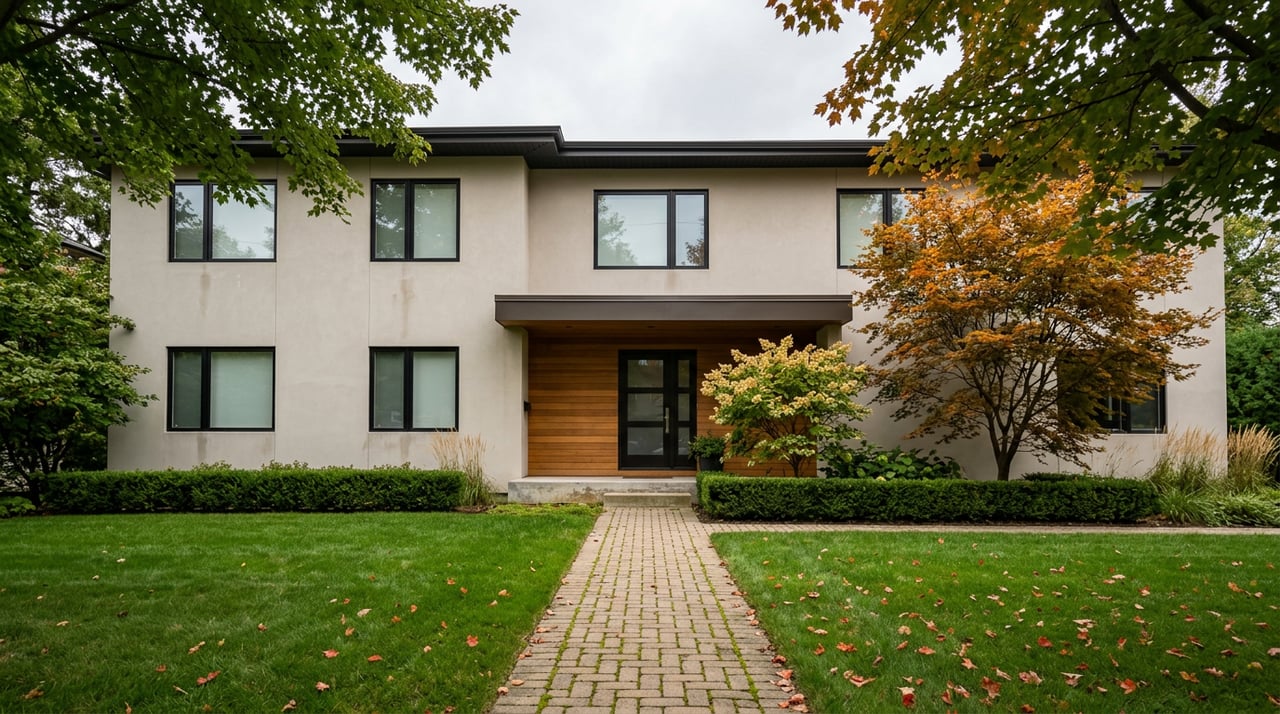
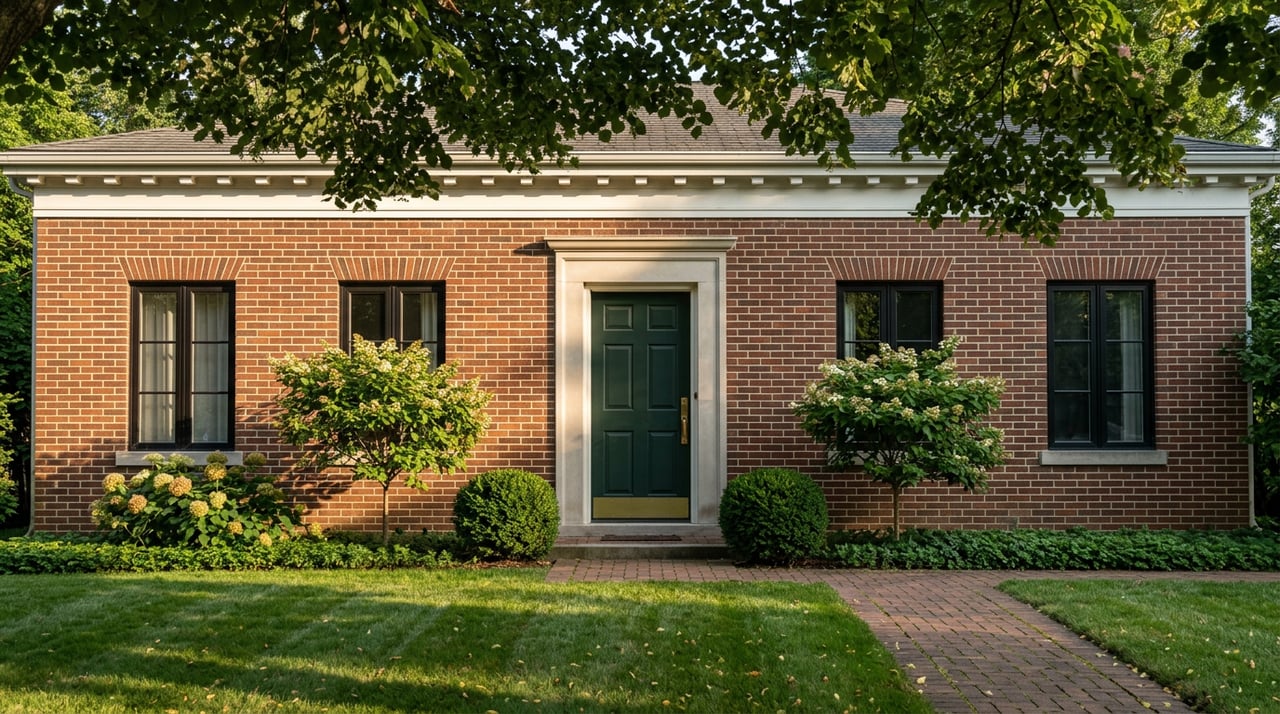
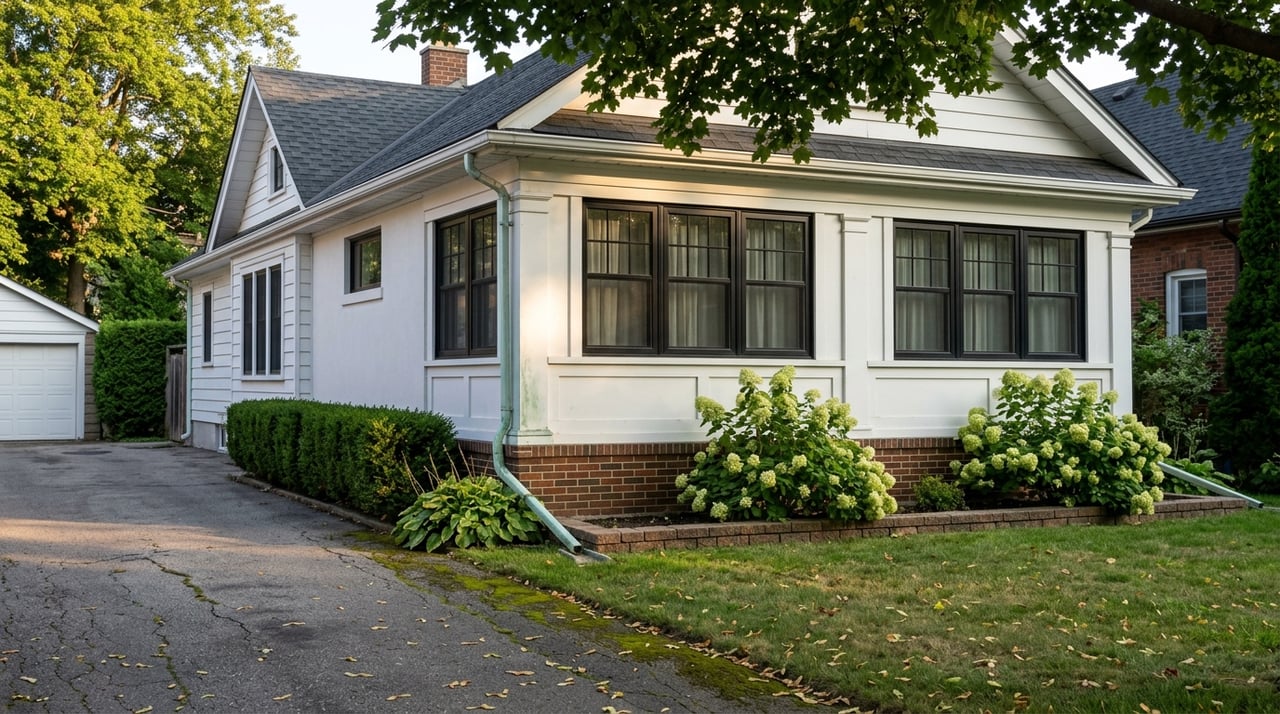
Gooderham's role here didn't end with bottled water. Through the early 1900s, he played a central part in subdividing the property for residential development, laying groundwork for the mix of housing that still defines the area: two and three-bedroom bungalows, Tudor and cottage-style two-storey houses, and larger Georgian homes with center hall plans, most of them built through the 1920s, 1930s, and 1940s on generous thirty-to-fifty-foot lots with private drives.
Around the same time the water business was winding down, Gooderham also helped form the Toronto Cricket Skating and Curling Club, which opened its Wilson Avenue grounds in 1925. The club's cricket pedigree actually runs deeper than that single date, tracing back to a founding in 1827, but the site most residents know today, with its tennis courts, curling sheets, and dining rooms, dates specifically to that 1925 opening. It's the layer that finally gave the neighborhood a name that outlasted the tannery and the water company combined.
What's still standing from each era
A short list of what you can still find if you know where to look:
- The York Mills Gardens apartment building, on the Yonge Street hillside where Gooderham's spring once ran
- The Toronto Cricket Skating and Curling Club at 141 Wilson Avenue, still operating on the same grounds it opened in 1925
- The pre-war bungalows, Tudor cottages, and Georgian homes on the neighborhood's tree-lined streets, most dating to the subdivision Gooderham set in motion
The club itself hasn't stood still. Alongside its original cricket pitch, eleven clay and two hard outdoor tennis courts, and eleven clay indoor courts, members now also play across four dedicated outdoor pickleball courts in summer and three indoor courts year-round, a sign that a hundred-year-old private club can still add new habits without losing the old ones. Curling, squash, lawn bowling, croquet, and swimming round out the roster, alongside the dining rooms and snack bar that keep members around after a match rather than sending them straight home. A few blocks over on Avenue Road, the Armour Heights Community Centre keeps its own quieter rhythm going, running a children's After-Four program and a Tiny Tots program alongside a small public library branch tucked inside the building.
The version of the story worth knowing
None of this changes what the neighborhood feels like day to day. The shops on Yonge and Avenue Road still fill the same small two-storey brick buildings they always have, a practical mix of bakeries, gift shops, hairstylists, and family-run restaurants rather than glass-fronted chains. The streets are still lined with the same bungalows, Tudor cottages, and Georgian homes the subdivision produced a century ago. The club still fills its courts every weekend, and residents can still reach the Lawrence and York Mills subway stations on foot, a detail that hasn't changed since the neighborhood's earliest transit maps.
What changes is how you read it. A neighborhood that seems to have one clean origin story, cricket club moves in, name follows, actually carries three distinct chapters stacked on top of each other, and the middle one, a bottled water business operating out of a residential hillside, is the one almost nobody brings up at dinner. Next time you walk past York Mills Gardens on your way to a match, you'll know what used to be underneath it.
If you're curious what a home in this stretch of Midtown and Uptown Toronto is actually worth, or what's currently available near the club, Adam Weiner + Associates knows this neighborhood down to the property lines that predate the name on the sign. Reach out anytime to request a concierge consultation.